

The Gatekeepers' Last Laugh
How access ruined the business model

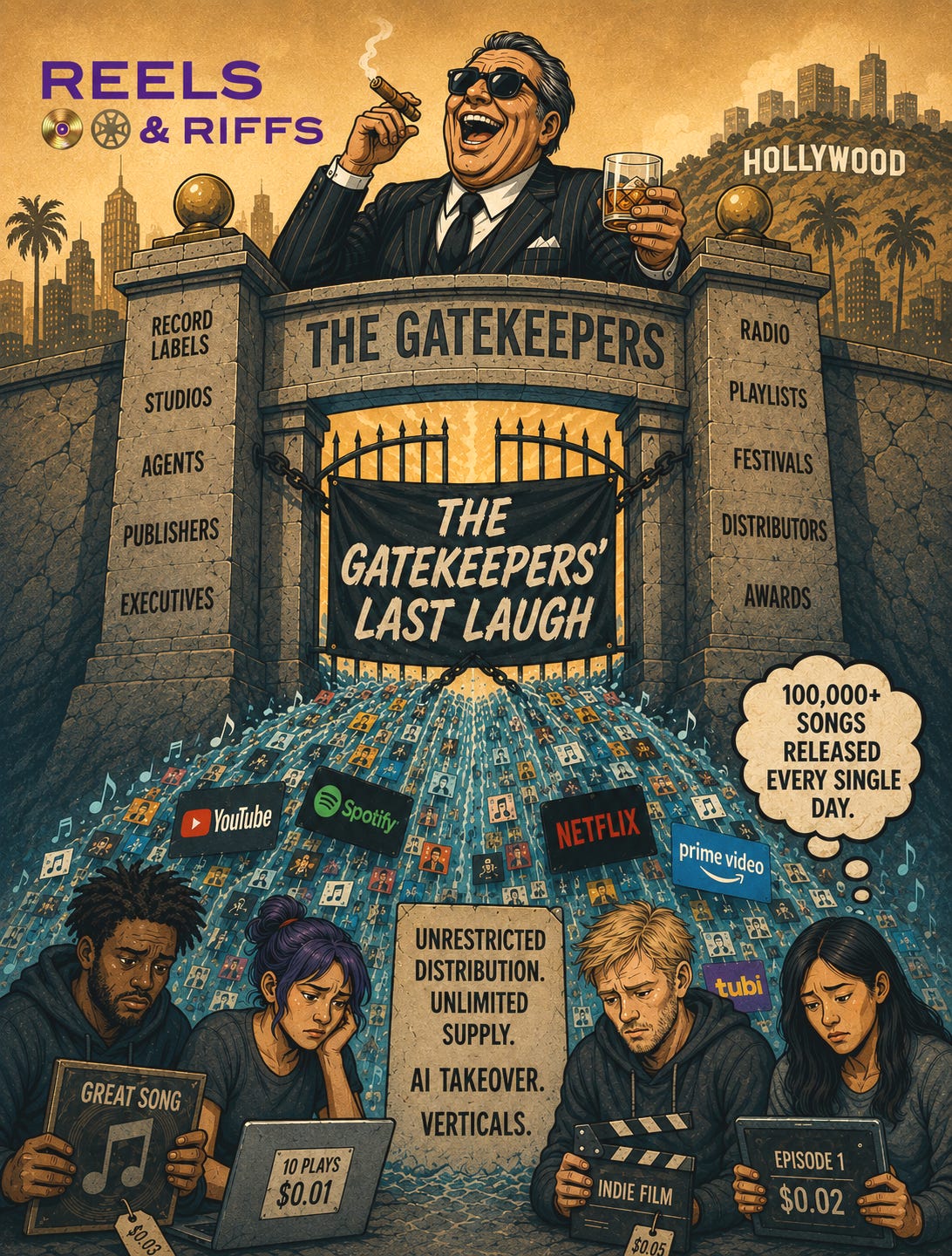
What typically happens when a marketplace becomes flooded with similar products and services?
Before we dive into that, let’s take a walk down memory lane.
The Heyday of the Entertainment Industry
Prior to the 21st century, the goal for aspiring artists, musicians, and songwriters seeking professional careers was simple: get signed to a record label and, ideally, a music publisher. A major record company would often provide an advance against future royalties, allowing artists to quit their day jobs, focus on writing and recording, and begin building a career. A major deal wasn’t just a contract; it was often the beginning of a livelihood.
Music publishers usually weren’t interested unless you had a record deal or cuts on major-label releases. Their business relied heavily on labels handling releases, distribution, marketing, and radio promotion.
In the 1990s, there were six major record companies: Warner, Sony, Universal, EMI, BMG, and PolyGram (later acquired by Universal). Film and television were similarly concentrated. Studios such as Warner Bros., Paramount, Universal, Fox, Columbia, MGM, and Disney dominated film, while NBC, CBS, ABC, and later Fox, controlled television.
There were some independents, of course, but not many.
In both music and film/TV, these companies acted as gatekeepers. Beyond the companies themselves, the gatekeeper ecosystem included executives, agents, managers, producers, radio programmers, and MTV executives.
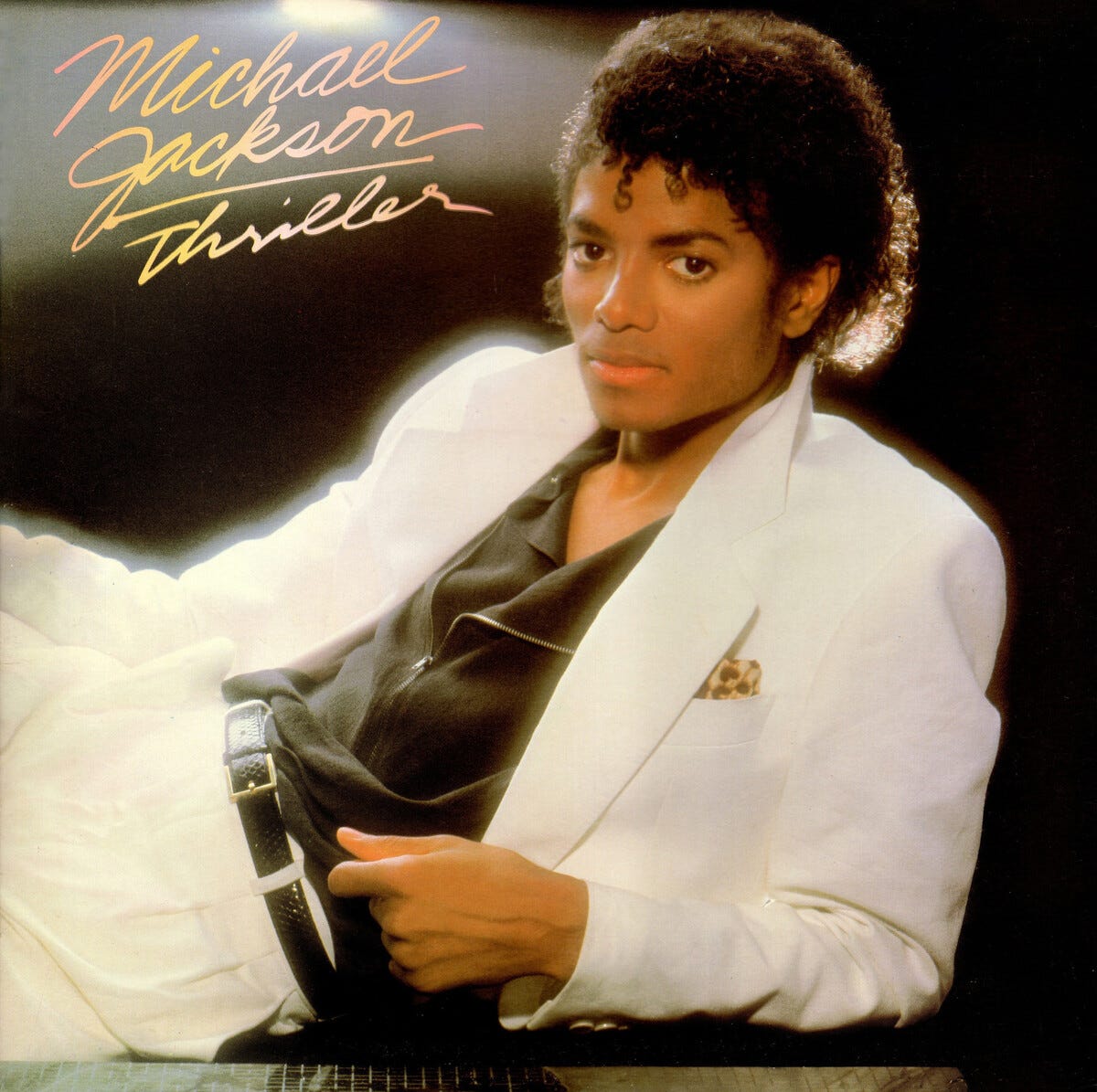
One famous example comes from the 2026 ‘Michael’ biopic: CBS Records president Walter Yetnikoff reportedly pressured MTV executive Bob Pittman into putting Michael Jackson’s “Billie Jean” into heavy rotation. MTV exposure in 1983 was a crucial marketing weapon. Yetnikoff allegedly threatened to pull all CBS artists from MTV entirely unless Pittman complied. And he did.
That was gatekeeping power.
Control
At every level - from deciding which artists, films, and TV shows reached audiences to determining what ended up on radio, television, or in movie theaters, there were gatekeepers.
The phrase “it’s who you know” may never have been more accurate than in 20th-century entertainment. Access to audiences often depended on a handful of people believing in your talent.
American Culture Shaped the World
Hollywood dominated global attention and revenue for decades leading up to the 21st century. Estimates suggest Hollywood generated roughly 60–70% of globally consumed commercial screen entertainment despite producing only a fraction of total audiovisual content.
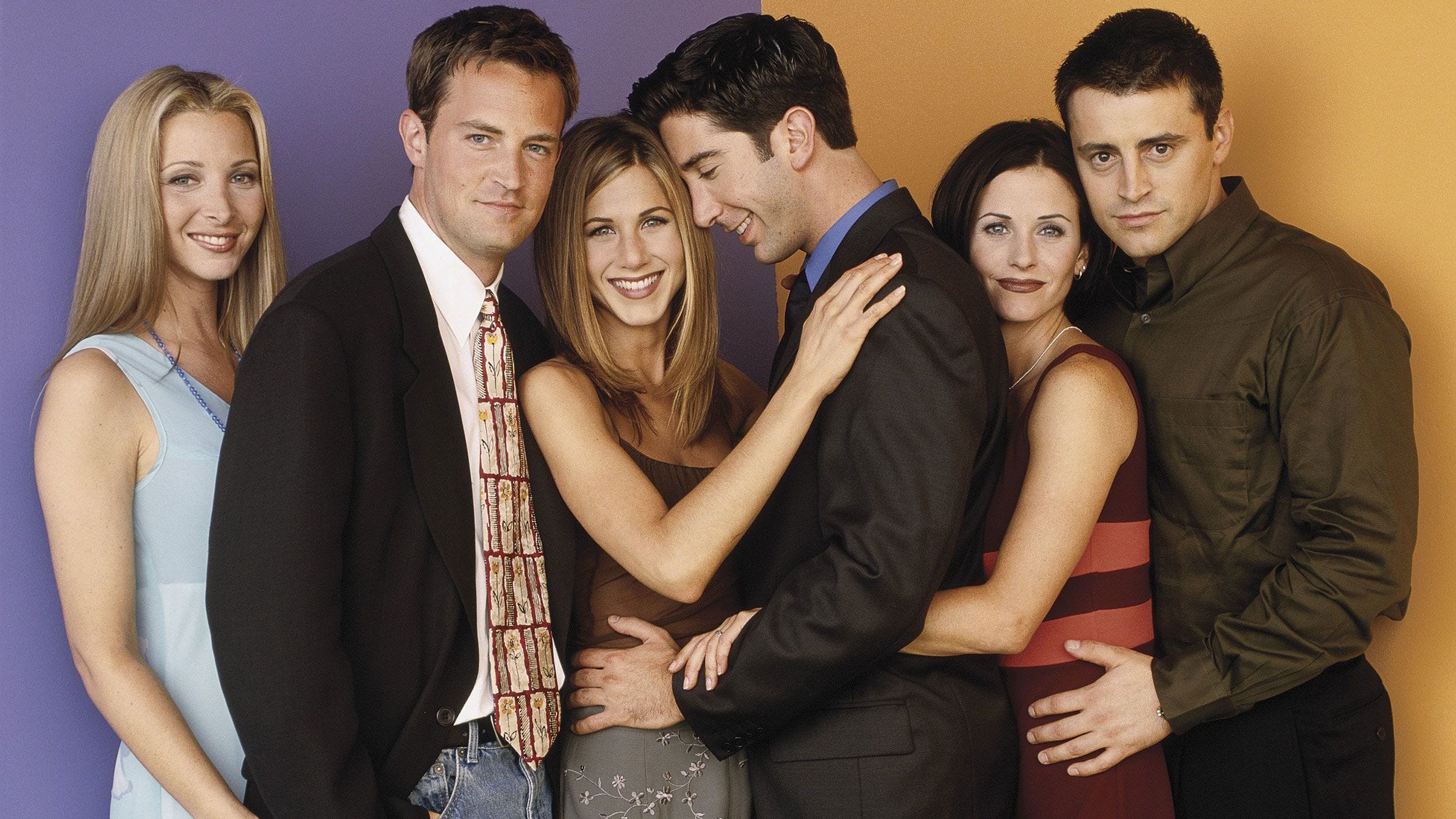
American films frequently captured 50–75% of international box office revenue, while syndicated television generated enormous downstream income. Friends, with its 236 episodes, reportedly generated billions in syndication revenue (and as a result eventually agreed to pay the six main cast members $1 million each per episode for the last two seasons).
Music looked similar.
By volume, American music represented only a minority of worldwide releases. But in terms of sales and cultural influence, U.S. music dominated. During the 1980s and 1990s, American artists captured an estimated 30–45% of global recorded music sales and significantly more in U.S.-originated genres like country, hip-hop, and R&B.
How could America dominate global culture while producing only a portion of global content?
The answer: gatekeepers.
Sustainable Entertainment Careers
Before 2000, the music and film/TV industries operated through highly centralized systems where a relatively small group of gatekeepers dictated much of the financial structure of creative careers.
While these systems concentrated power and limited access, they also created conditions that frequently supported long-term and profitable careers because the same companies controlled nearly every stage of the chain: talent discovery, development, financing, production, marketing, distribution, and audience access.
This vertical integration allowed companies to invest heavily in creators, develop talent over years, and monetize content through multiple revenue streams.
The system was far from equitable or artist-friendly in every case, but it created a more predictable ecosystem for many who successfully made it through the gates.
In the Reels & Riffs article ‘The Most Outrageous Recording Agreement I’ve Ever Seen’ from May of last year, I wrote about one particular record deal I reviewed that reflected this ability for entertainment companies to invest heavily in an artist with the expectation that the artist would make the money back.
Actors commanded extraordinary salaries. Jim Carrey, Julia Roberts, Mel Gibson, Tom Hanks, and Arnold Schwarzenegger all reportedly earned around $20 million or more upfront for individual films in the late 1990s.
Audience Attention and Eyeballs
Another overlooked reason for the extraordinary success of the U.S. entertainment industry before 2000 was scarcity.
Unlike today’s fragmented world of streaming platforms, social media, and endless on-demand content, audiences had limited ways to consume entertainment.
Music fans bought albums, listened to terrestrial radio, or watched MTV. Film and television audiences relied on theatrical releases, broadcast networks, cable television, and home video.
Because attention was concentrated rather than scattered across thousands of platforms, the film and TV studios, record labels, networks, and publishers controlled not just creation and marketing, but also access.
That concentration created powerful gatekeepers and barriers to entry, but it also enabled the industry to build cultural phenomena at huge scale and create the superstars we all know from the past.
The Water Cooler Conversations
Before streaming, Monday morning water cooler conversations were a real cultural institution in America and elsewhere.
Millions of people watched the same television episodes, saw the same films, heard the same songs, and watched the same music videos. With fewer channels competing for attention, shared experiences were common and culture felt synchronized.
Chances were that your work colleagues or fellow students had consumed pretty much the same content you had over the weekend, which gave you something to talk about.
Entertainment wasn’t just content; it acted as social glue.
The Dissemination of Entertainment Platforms
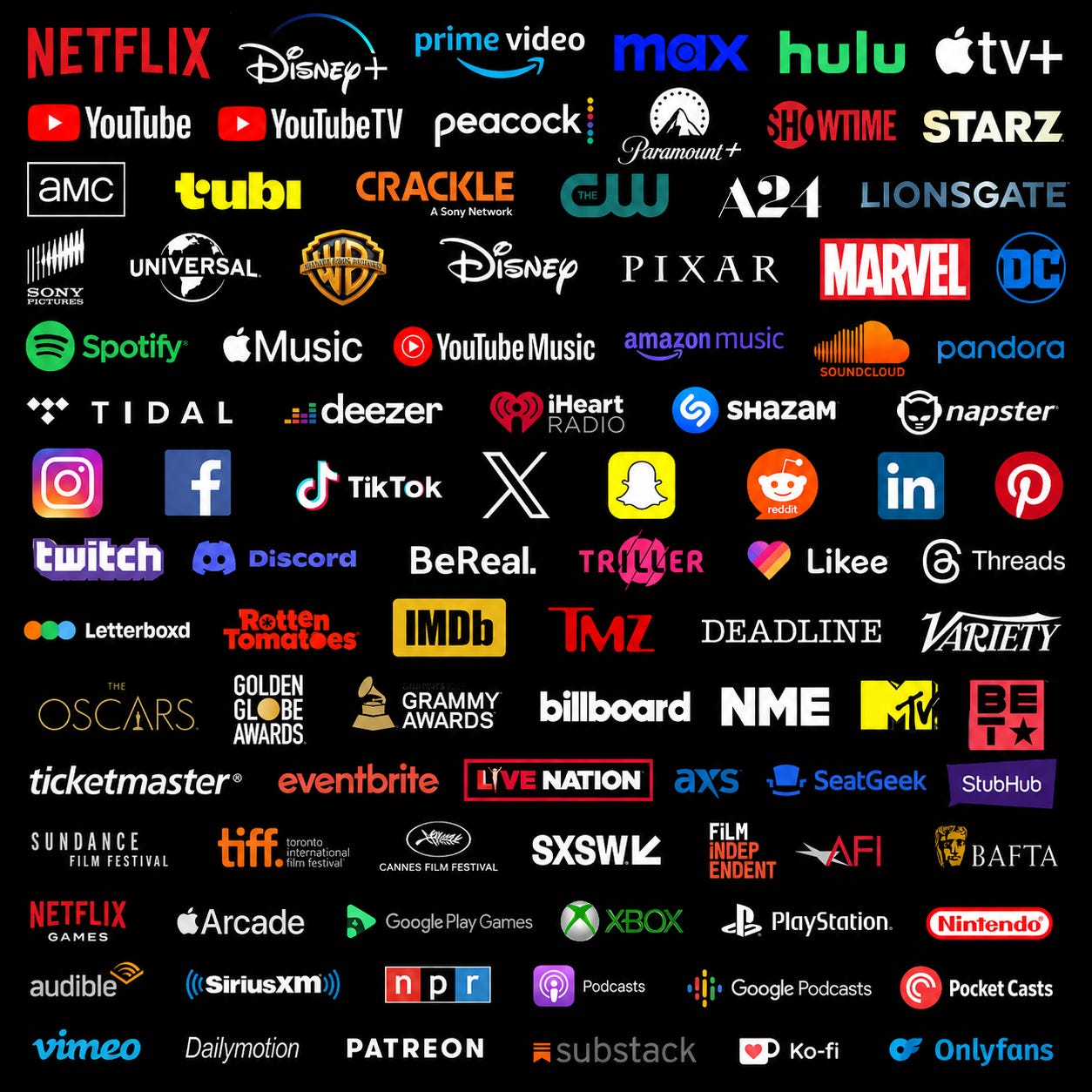
What was once a controlled ecosystem with high barriers to entry has become nearly an all-access pass.
Today, anyone can create music, films, TV content, podcasts, or social content and immediately publish it.
But fragmentation comes with consequences.
Under the old model, television series generated reruns, syndication, foreign licensing, home video sales, and cable windows. Every reuse event created additional revenue opportunities and residual payments.
Today, content often lives inside one platform ecosystem.
Streaming services still pay residuals, but they rarely resemble the long-tail economics of the old system.
The Gatekeepers’ Last Laugh
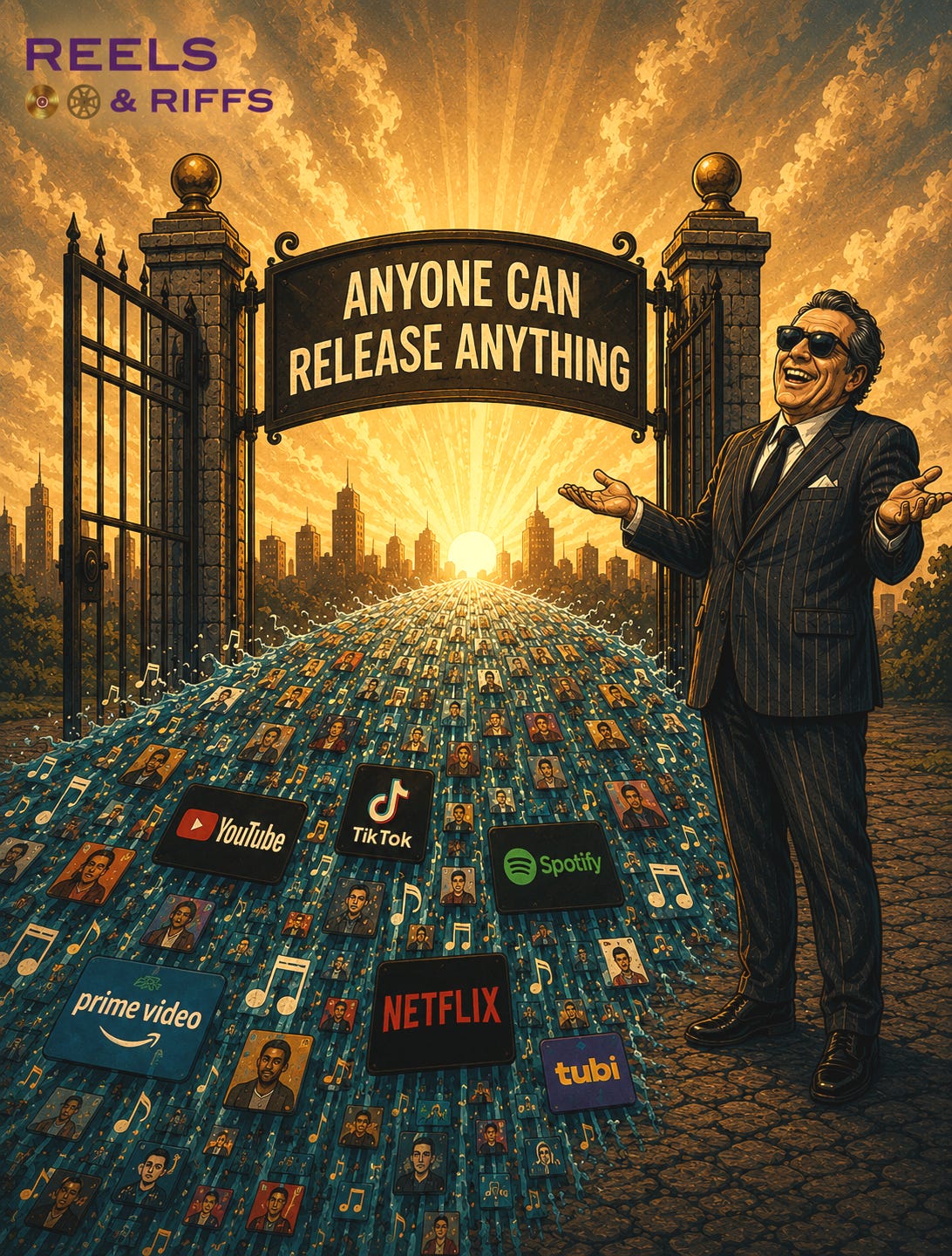
Today, many traditional gatekeepers are gone or have been replaced by platforms, algorithms, and audience metrics.
The positive side is obvious: creators no longer need permission to distribute their work. Platforms like Tubi, Spotify, Apple Music, YouTube, as well as social media platforms like Instagram and TikTok, allow nearly anyone to reach potential audiences.
However: the consequence of universal access is abundance.
More than 100,000 songs are uploaded daily. Millions of videos and reels appear every day.
The population is not increasing at the same pace as content creation.
There are still only 24 hours in a day.
Is there enough audience attention to make content creation economically sustainable across the entire value chain, especially for the creators themselves?
This is where the former gatekeepers may be having the last laugh.
Before 2000, relatively few creators got a shot, but those who did often entered a system designed to maximize their chances of commercial success.
The gates were narrow, but the machine behind them was powerful.
Back then, those who truly made it, became superstars. Their albums sold millions. Their films reached massive audiences. Compensation reflected that reality.
Do We Need More Gatekeepers Today?
In many ways, universal access and content saturation have disrupted the old business model.
Do we need barriers to entry again?
Would the creative industries benefit from making it harder to release content?
Nordic film industries still operate through systems where the local film institutes hire experienced consultants to approve or reject funding applications. Private financing often follows institutional support.
Is that model closer to the future?
Let me know your thoughts in the comments below on what you think is the best way forward.
The entertainment business is changing faster than most people realize. If you enjoy connecting the dots between creativity, culture, money, technology, and the future of the industry, consider becoming a paid subscriber to Reels & Riffs. The deeper stories often live behind the curtain - and we’re just getting started.