

Eurovision Show Contest
Is the Eurovision Song Contest still a song competition or a spectacle?

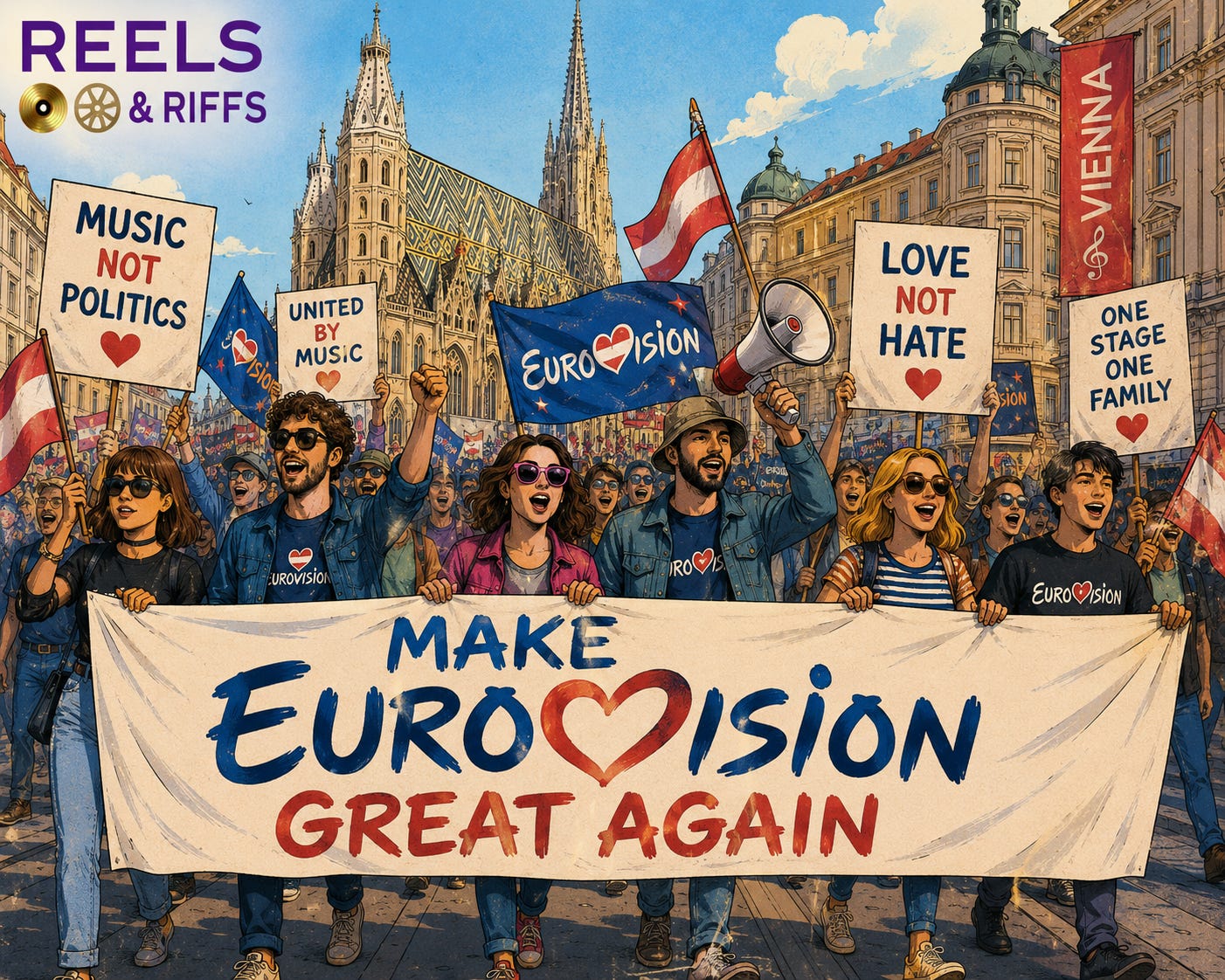
Eurovision has for a long time been bigger than a song contest. But in Vienna this year, the world’s largest music spectacle felt less like a celebration of catchy hooks and strobe lights - like a collision between pop culture, politics, identity, fandom, and digital warfare. The 70th edition delivered everything Eurovision does best: outrageous performances, surprise voting twists, international drama, and a historic first victory for Bulgaria’s DARA and the song “Bangaranga.” But beneath the confetti and pyrotechnics, Eurovision 2026 also raised a larger question: are we still watching a music competition, or a global cultural battleground wrapped in sequins?

On May 24, 1956, exactly seventy years ago, the first Eurovision Song Contest took place. Only seven member countries of the European Broadcasting Union (EBU) participated: Belgium, France, West Germany, Italy, Luxembourg, The Netherlands, and Switzerland - and with two songs each.
The first winner was Swiss artist Lys Assia with the song “Refrain.”
Or was she? Because the songwriters of “Refrain,” Geo Voumard and Emile Gardaz, were the true winners. After all, this was a competition about songs, not performers.
Today, the performing artist receives the well-known Crystal Microphone while the songwriters receive smaller versions of the same trophy.
The World’s Greatest Songwriting Competition
From 1956 to today, a lot has changed. New countries from the EBU have joined the competition, select countries outside the EBU have joined, voting rules have changed several times, countries and artists have been disqualified and banned, and controversy in general has arisen several times. Still, this is the longest-running annual televised music competition in the world.
In 2024, the viewership tuning in to the final was reported at 163 million, while in 2025 the number increased to 166 million. However, for 2026 and the final that took place on May 17th, the total global viewership number has so far not been widely reported. Instead, there are reports from individual countries where most of the reports are focused on growth, but with several countries showing a significant decline.
Eurovision 2026
25 countries were in the Grand Final on May 17th, and here are the results:
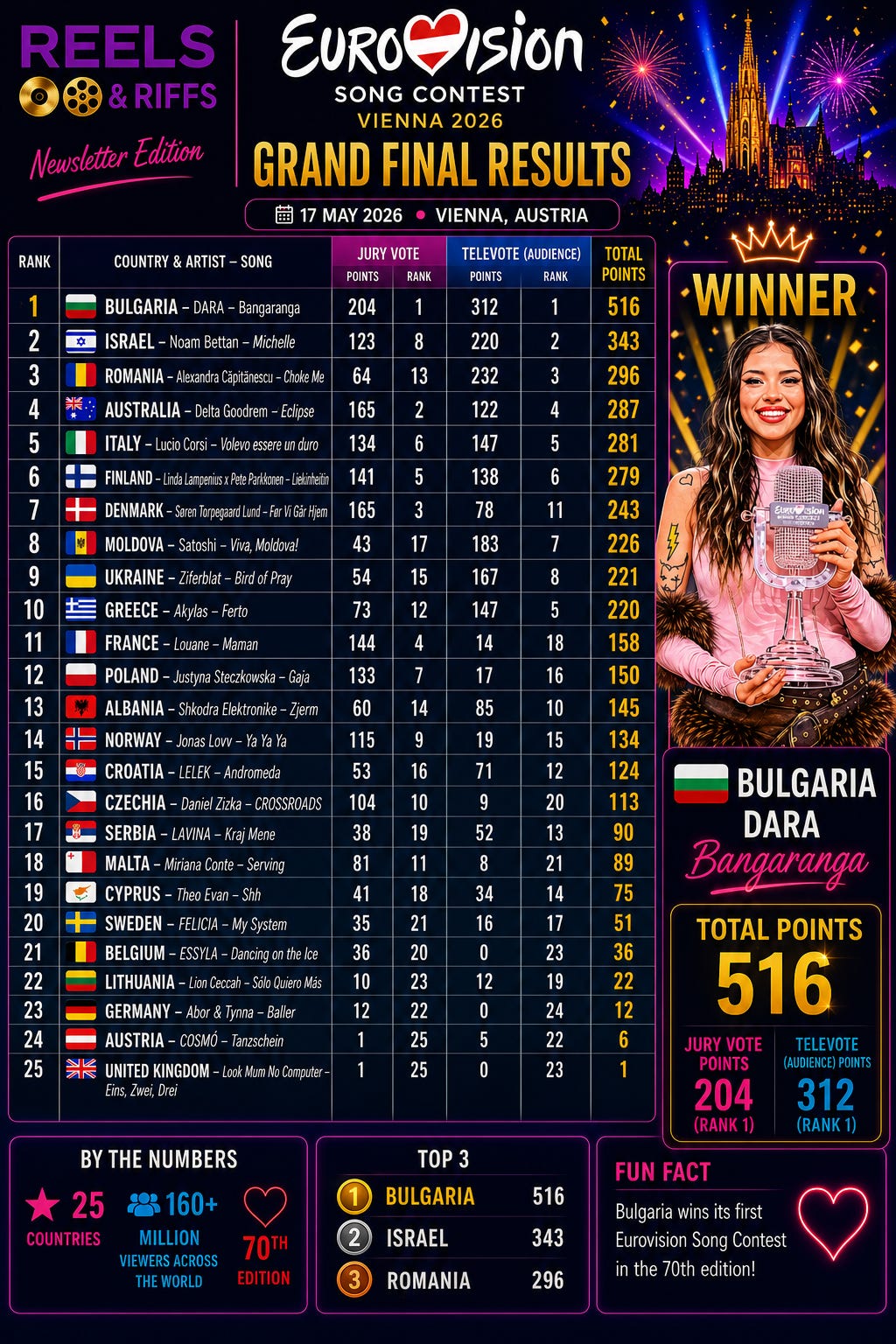
If you haven’t watched or heard the winner, watch Bulgaria’s Darina Nikolaeva Yotova, better known as DARA, perform her winning song ‘Bangaranga’ at this year’s Grand Final:
The Basic Rules of Eurovision
There are six guaranteed places in the Grand Final:
the selection from France, Germany, Italy, Spain and the United Kingdom (referred to as the Big Five)
the host country
Eligibility to participate is subject to compliance with the EBU membership requirements and the Rules of the ESC. The EBU may, in exceptional circumstances, invite additional participants
Voting and scores are decided by:
National juries appointed by the national EBU-members
Audience Voting
National audience voting implemented in each participating country
Audience voting in the Rest of the World (RoW), i.e., outside the participating countries
Winner of the Grand Final: The song(s) that receive the highest combined points from both the audience the national juries, at the time of the results announcement, will be deemed the winner(s).
A maximum of 38 countries compete across the Semi-Finals
From each Semi-Final, 10 entries qualify for the Grand Final (20 total plus the Big Five)
To qualify, a song has to be less than three (3) minutes in length
The song must be original and never publicly released prior to a specific date announced by each country’s EBU member
There are no language restrictions
The song submitted must be the same as the song performed in the competition
Up to six (6) artists/performers can be on stage at the same time
An artist must be at least 16 years old at the time of the first rehearsal
Participants must respect the values of the competition and not engage in conduct that could harm its reputation
The following is not permitted:
Political or ideological messages
Commercial promotion or advertising
Offensive, discriminatory or otherwise inappropriate content
More generally, any content or behavior that may harm the integrity, reputation or non-political nature of the Contest is not permitted. These principles apply at all times, including during:
Performances
Rehearsals
Official ESC-related content
All songs must be performed live on stage
Vocals and Backing tracks:
Lead vocals must be performed live on stage. Lip-syncing is not permitted
Backing tracks and pre-recorded elements may be used in accordance with the ESC Rules, provided they do not replace or unduly assist the live vocal performance
Additional technical requirements apply to ensure the integrity and authenticity of the live performance
Reflections on the Rules
The Big 5 are the biggest financial contributors to the competition, and in the early 1990’s, their guaranteed participation was implemented to make sure Eurovision’s financial structure remained secure after Germany failed to qualify. Today, I find it hard to believe this guarantee still would be necessary, considering the rising international popularity of the competition, and it does have a certain United Nations Security Council vibe to it that I am not a big fan of.
Eligibility and disqualification remain huge issues. Australia is not an EBU member, yet one ”guest appearance” in 2015 turned into a regular spot in the competition. Israel has been an EBU member since 1973 and competed in the competition since the 1970’s, winning a total of four times, but is also a controversial contestant.
Are the artists really performing live? It seems to me that it is highly questionable if all the audio we as television viewers hear, is the main live vocal from stage.
What many (if not all) of the Eurovision performers do, is to have pre-recorded lead vocal tracks in the mix together with the main backing tracks (drums, bass, guitar, keyboards, background vocals, etc.). The real question is if whomever is running the sound for each country’s performance have a way of pushing up the pre-recorded lead vocal from the backing track in certain sections and lowering the live stage microphone. Or, the singer pulls back on stage to let the lead vocals on the tracks be heard. I have a sneaking suspicion that some of this, any of this, is actually happening for many of the artists.
One artist that clearly was singing live, actually illustrates this in the sense that his slightly off-key live lead vocal on the choruses rubbed up against the pre-recorded lead vocals on the backing tracks. Norway’s Jonas Lovv did not stop singing on the choruses; had he done so, we would’ve heard the perfectly pre-recorded lead vocals alone without any dissonance at all. My suspicion is that many other artists found a way to manipulate this by pushing up the prerecorded lead vocal. It would be interesting to have this examined more closely. It is supposed to be a live competition. Watch Jonas Lovv’s performance and listen to the choruses in particular where you clearly hear the pre-recorded lead vocals when he goes off key:
The rules of voting are worth a discussion, as well. There are juries selected by each country’s EBU member broadcaster, and then there are televotes from the viewing audience in that country. But, there are also televotes from all around the world.
Why is someone in the United States, Argentina, South Africa or Taiwan, for that matter, allowed to vote in a competition they are not competing in?
The intention was clearly to create international awareness and excitement about the competition, but when opening it up widely to literally billions of people, what are the chances of manipulation and “rigging” of the system?
Issues and Controversy
The Netherlands’ artist in 2024, Joost Klein with the popular song “Europapa“ which was a top contender leading up to the competition that year, was disqualified after backstage controversy involving Klein and a camera operator. Klein was accused of making threatening movements. The Dutch broadcaster AVROTROS strongly disagreed and said there had been prior agreements that Klein would not be filmed coming off stage. They argued the punishment was disproportionate. The host country Sweden’s authorities ended up dismissing the case against Klein based on lack of evidence. The question remains why EBU was so quickly to ban Klein. Many have speculated there was pressure from the other top contenders that year to make this happen.
Many question why Israel is an EBU member and is allowed to compete, first and foremost based on Israel not being geographically in Europe. Criticism against the EBU for letting Isreal compete has risen sharply based on Israel’s continued occupation and aggression in the Middle East, while Russia was boycotted immediately after its attack on, and invasion of, Ukraine. Critics want equal treatment and are saying you can’t argue that we need to separate music from politics and violence and then make this principal only apply at EBU’s discretion.
The incident with Joost Klein of The Netherlands is also cited as an example of how swift the EBU can react if they really want to.
In 2024, 2025, and 2026, rumors and accusations of Israel manipulating votes and organizing massive PR campaigns surfaced because of how unexpectedly well Israel did in the competition. Investigations found coordinated advertising campaigns tied to official or government-related channels where some campaigns reportedly generated tens of millions of impressions. Eurovision organizers later changed voting rules, reducing vote limits and tightening rules around direct vote solicitation.
2026 saw five EBU countries boycott the competition: Spain, Ireland, Netherlands, Slovenia, and Iceland. Their main concerns included Israel’s participation and potential issues with the televotes. There were even protestors taking to the streets of this year’s host city, Vienna.
How to Make Eurovision Great Again
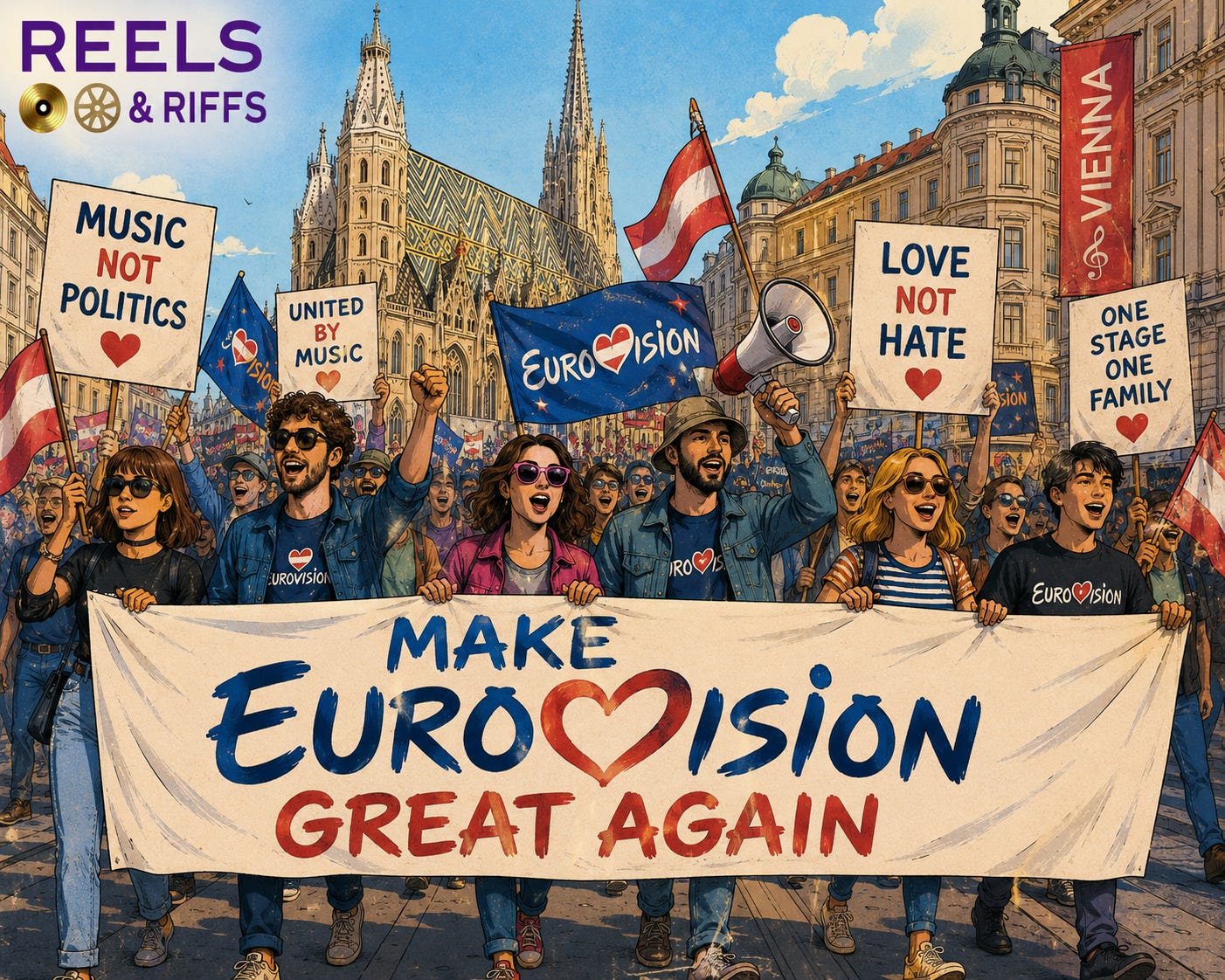
I think we need to go back to the drawing board. Here are three issues I have with Eurovision:
Embrace Live performances - for real. Eurovision is first and foremost a songwriting competition. Let’s make sure each and every song is performed live across the board - both for singers and musicians - on equal footing. No more backing tracks. Bring back the orchestra and backing band who plays for everyone - why the hell not. Do what you want on your released single of the song - overproduce it as much as you want - but at the competition, live on stage, we want the songs to be judged on their merits as musical compositions. Lean into the live experience with its imperfections and unpredictability. Live is what’s authentic in 2026.
Make Eurovision a European competition. Thank you, Australia and Israel for your musical contributions to the history of Eurovision, but it’s called Eurovision, not Worldvision. You’re out, and any other non-EBU members not technically in Europe, you’re out, too. Start your own music competitions in your neck of the woods, be our guests. Also, voting should be limited to the countries competing in the semi-finals and the Grand Final and not the entire world. The world is welcome to watch. It just doesn’t make any sense that I can sit here in LA and vote for a European music competition. I love watching it; that is enough for me. And writing about it, of course. :)
Let’s agree on this one simple rule: If your country occupies or invades another, you’re out of the EBU and Eurovision. Let’s keep it simpe. It doesn’t have to be more complicated than that.
Those are the main issues for me. What else would you like to change with Eurovision? Let me know in the comments below.
Eurovision may end when the confetti falls, but the stories, controversies, industry shifts, and cultural ripple effects are just getting started. Reels & Riffs subscribers get analysis, behind-the-scenes perspectives, bonus commentary, and exclusive content exploring where music, film, TV, and creativity collide. If you can, your upgrade to a paid subscription is greatly appreciated.