

Breaking the Ceiling: Norwegian Cinema’s Extraordinary Oscar Morning
Sentimental Value’s record-setting nine nominations, plus two additional nominations, mark a turning point for Norwegian film in Hollywood.

There are mornings when an industry quietly shifts. Then there are mornings when the shift is impossible to ignore.
Today was the latter.
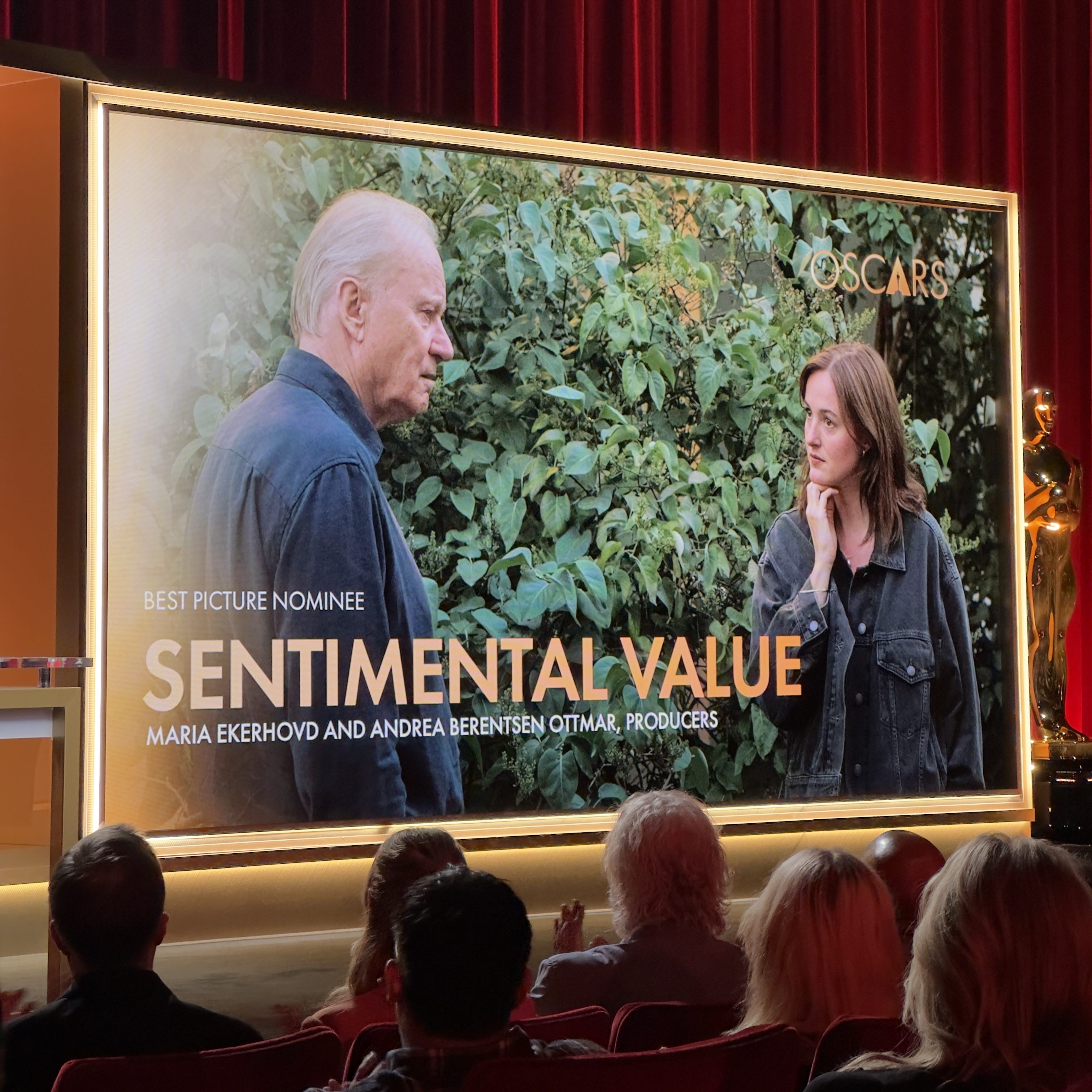
As the Oscar-nominations were announced, Joachim Trier’s Sentimental Value (produced by Mer Film) landed nine (9) nominations, a number that simply does not exist in the modern history of Norwegian cinema. This is not just a new high; it is a ceiling shattered - the kind of moment that forces Hollywood, and perhaps Norway itself, to recalibrate expectations.
For decades, Norwegian films have been admired in the U.S. for their restraint, seriousness, and craft. They have traveled well on the festival circuit. They have earned respectful reviews. They have been liked. What they have rarely been in the U.S., is central.
This morning changed that.


From Prestige to Presence
What makes this moment different isn’t just the number of nominations, extraordinary as that is, but the way Sentimental Value has already entered the broader American cultural bloodstream.
Last fall, on November 15th, the film was parodied on America’s iconic late-night sketch comedy and variety show Saturday Night Live. That may sound like a footnote, but it is anything but. SNL does not parody foreign films because they are obscure. It parodies them because they have become recognizable; because they’ve crossed the invisible line from “international” to mainstream reference. (For more on SNL’s take on Sentimental Value, read our article following that show).
Parody is a form of cultural acceptance. You don’t spoof something Americans don’t know.
In that sense, Sentimental Value didn’t just earn nominations this morning; it arrived months ago.
Add to that the exceptional Oscar-campaigns Sentimental Value’s U.S. distributor Neon has become known for, and the result is clear on a morning like today.
A New Kind of Norwegian Export
Norwegian cinema has often been framed in the U.S. as austere, distant, or “very Nordic.” That framing has its strengths, but it also acts as a limiter. Sentimental Value feels different. Not because it abandons its identity, but because it translates it.
The film trusts American audiences without pandering to them. It assumes emotional intelligence. It allows silence and tension to coexist with universality. In doing so, it sidesteps the old trap of being either “too foreign” or artificially accessible.
The premise of the film is also familiar, especially to people in creative industries. The film examines the difficult balance between a filmmaker’s work life and personal life, with two daughters who feel neglected by their famous filmmaker father and the void his absence creates in their lives. (Read our review of Sentimental Value).
This is not Norwegian cinema asking for permission. It is Norwegian cinema speaking with confidence - and being heard.

Why Nine Nominations Matter
Nine nominations for one film send a message to:
• U.S. studios, that Norwegian filmmakers can operate at the highest global level
• International financiers, that Norwegian filmmakers are not a risky category, but a creative and bankable asset
• Young Nordic filmmakers, that the ceiling they’ve internalized may no longer exist
This kind of recognition changes what projects get greenlit, who gets meetings, and which stories are deemed “exportable.” A Norwegian film receiving nine Oscar-nominations reframes Norway not as a boutique market, but as a serious contributor to global cinema culture.
The Long Game Pays Off
What we are seeing today didn’t happen overnight. But moments like this are accelerators. They compress timelines. They open doors faster than strategy ever could.
There will be more Norwegian films in Hollywood meetings this year because of Sentimental Value. That is not speculation - it is how the ecosystem works.
A Turning Point, Not a Victory Lap
This is not the end of a journey. It’s the beginning of a new phase.
The danger now would be to treat this as an anomaly rather than a signal. The opportunity is to recognize that Norwegian cinema no longer needs to explain itself in the U.S. It can simply exist, compete, and occasionally dominate.
This morning wasn’t just about nominations.
It was about visibility.
It was about legitimacy.
And it was about a small film culture proving, unmistakably, that it belongs on the biggest stage in the world.
More Nominations for Norwegian Film
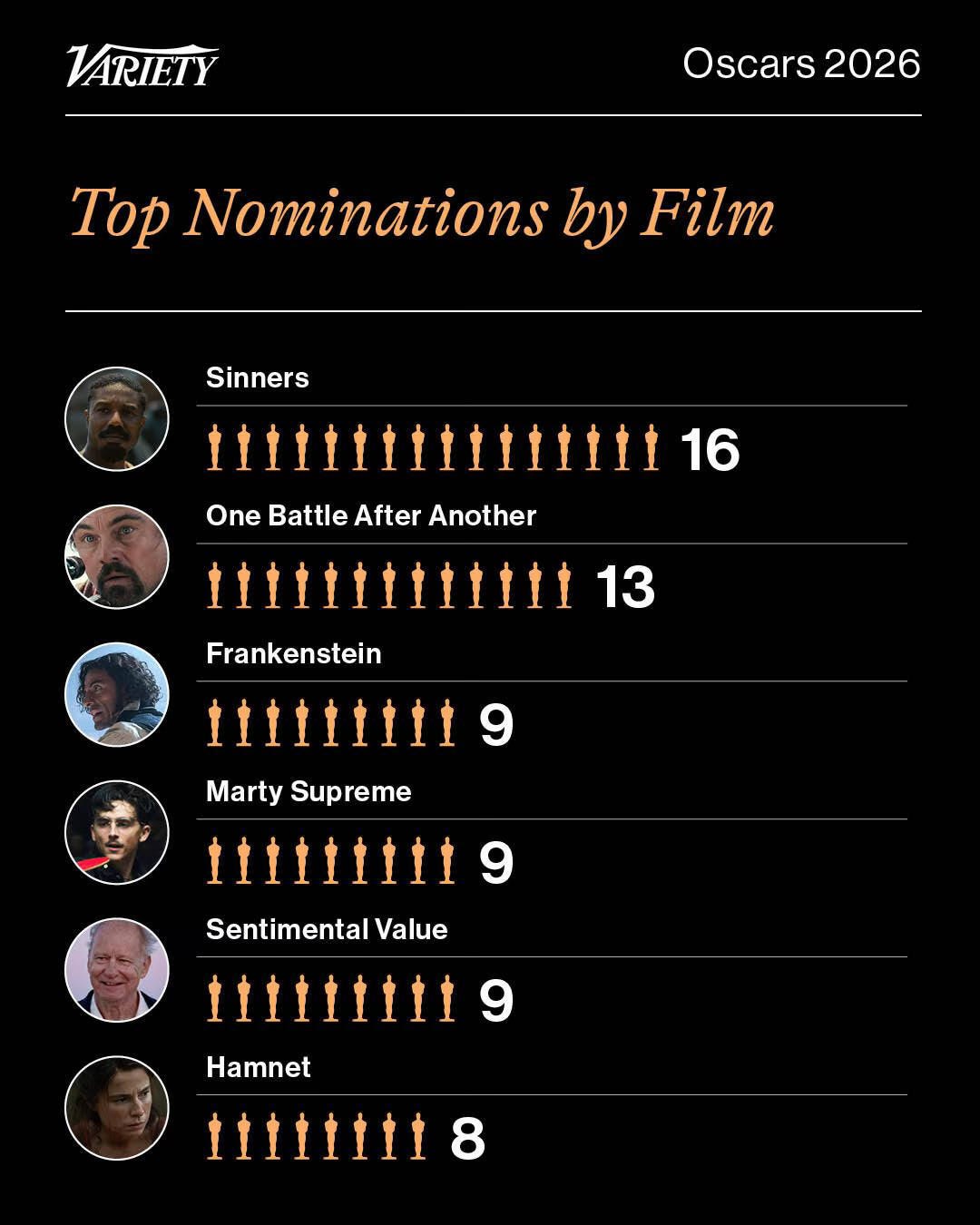
There were two additional Norwegian Oscar-nominations announced this morning: A nomination for Achievement in Makeup and Hairstyling for The Ugly Stepsister (produced by Mer Film), and a nomination for Achievement in Visual Effects for Storm VFX Studios for Sinners, this year’s most-nominated film with 16 nominations.
Here Are Today’s Eleven Norwegian Oscar-Nominations
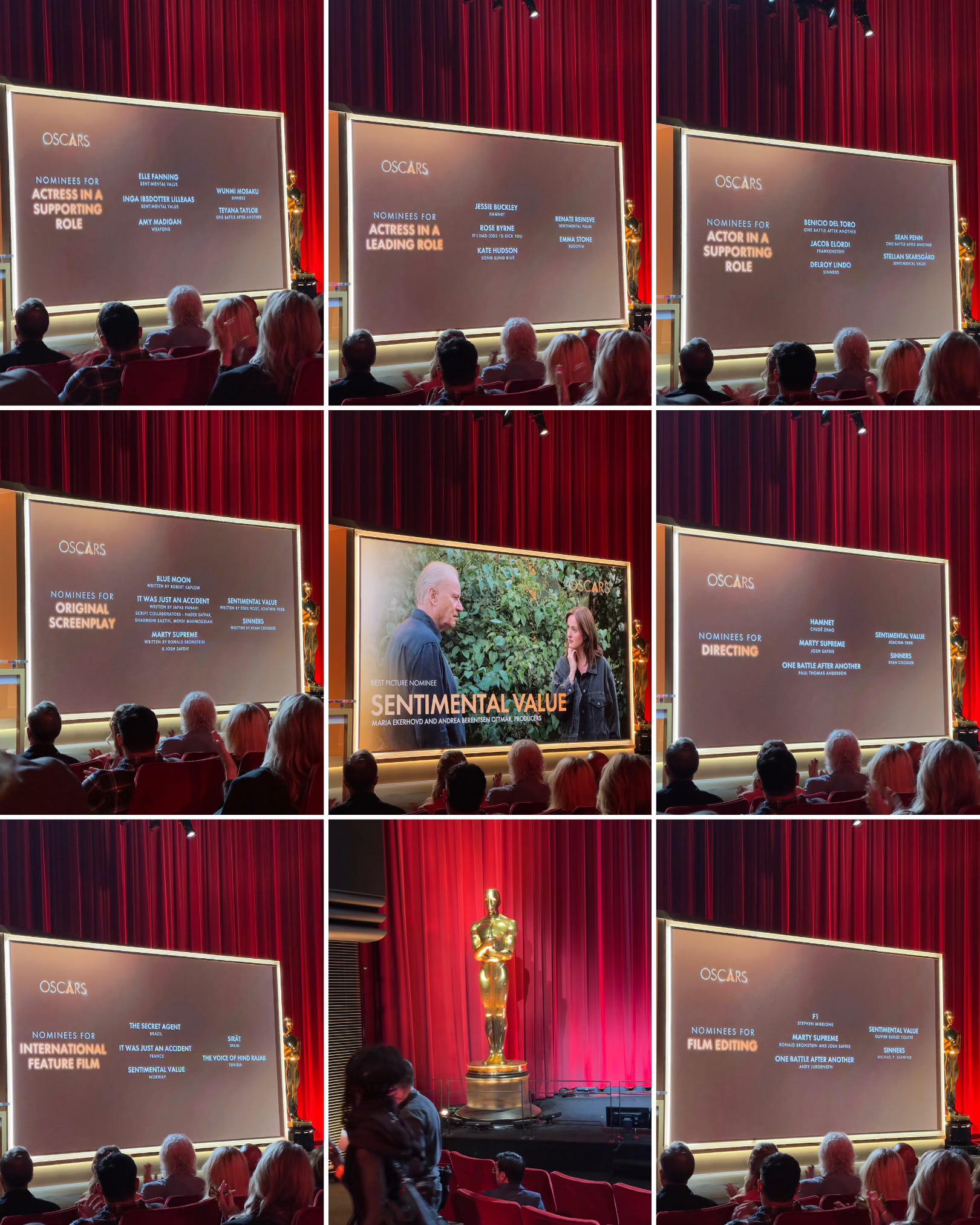
Sentimental Value (9 nominations):
Stellan Skarsgård - Performance by an actor in a supporting role
Renate Reinsve - Performance by an actress in a leading role
Inga Ibsdotter Lilleaas - Performance by an actress in a supporting role
Elle Fanning - Performance by an actress in a supporting role
Joachim Trier - Directing
Olivier Bugge Coutté - Film editing
Best international feature film (Norway). This is the seventh nomination for Norway. Previous nominations were for Nine Lives (1957), Pathfinder (1987), The Other Side of Sunday (1996), Elling (2001), Kon-Tiki (2012) and The Worst Person in the World (2021).
Maria Ekerhovd and Andrea Berentsen Ottmar - Best picture
Eskil Vogt, Joachim Trier - Original screenplay
The Ugly Stepsister
Thomas Foldberg and Anne Cathrine Sauerberg - Makeup and hairstyling
Sinners
Michael Ralla, Espen Nordahl, Guido Wolter and Donnie Dean - Achievement in visual effects
Time to Take Action
It is imperative that Norwegian filmmakers, production companies and the public funding infrastructure in place to support them, do not let this moment pass them by. These nominations are a call to action, and an opportunity to establish international investment relations for Norwegian film long into the future.
Reels & Riffs is where Nordic creativity meets Hollywood reality. Today, those two worlds moved closer together.
I'm also very excited for Norwegian director, Kristoffer Borgli's upcoming film, "The Drama." Although it's not a Norwegian film per se, (It's in English and distributed by A24), the fact that Borgli is Norwegian and on the verge of breaking through (much like Joachim Trier) to the Hollywood mainstream should also raise the profile of Norwegian film/filmmakers too.